When a pipe bursts or a storm backs up your drain lines, waiting on hold is the last thing you can afford. Our New York-based crews carry moisture meters and truck-mount extraction equipment on every rig so the drying process starts the moment we knock on your door.
Call +1-844-578-1604 Now
Aqua Guard Water Damage built its New York operation around one standard: arrive fast, document everything with moisture readings and thermal imaging, and communicate the drying plan in plain language before we touch a single wall.
Being local to New York means our estimators know the going rate for drywall and flooring replacement in your area, so the quote you get reflects your market instead of a national average that never quite matches your invoice.
We invest in ongoing training as drying standards and equipment evolve, rather than treating a technician's initial certification as the finish line.

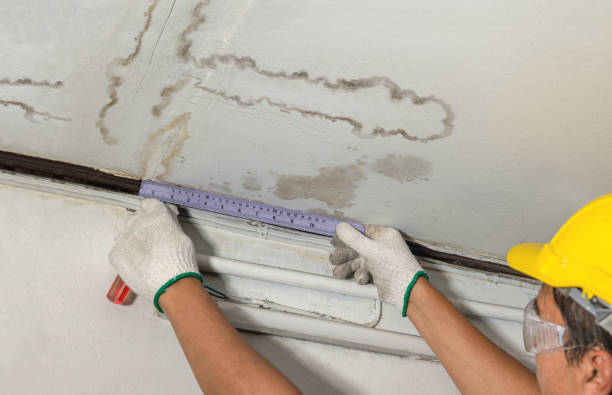
A stain that keeps reappearing after you paint over it is a signal, not a coincidence — the moisture source behind the wall hasn't been addressed and needs a moisture meter reading, not a fresh coat of paint. Repainting without finding the source just hides the problem for a few more weeks.
A persistent musty smell in a basement or bathroom usually means microbial growth has already started somewhere you can't see, often inside wall cavities or under flooring. Air fresheners will mask it temporarily but won't touch the actual source.
Tile that suddenly sounds hollow when you tap it often means the mortar bed underneath has been sitting in moisture long enough to lose adhesion. That hollow sound rarely resolves on its own.
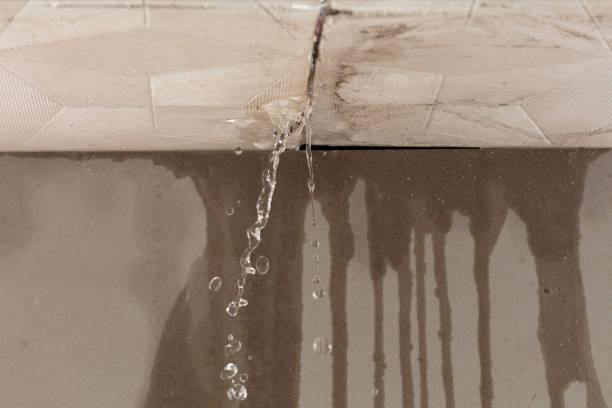
If your usage climbs but nothing in your household routine changed, a hidden leak behind a wall or under the foundation is worth investigating immediately, since slab leaks rarely announce themselves any other way.
Paint that bubbles or peels away from a wall, especially near baseboards, usually means moisture is pushing through from behind rather than a simple application problem.
Dark spotting in grout lines or around window frames is often the first visible sign of a moisture problem that's been developing for weeks.
We treat Flood Damage Cleanup as one continuous job rather than a series of handoffs — the crew that extracts the water is accountable for the drying results, and the drying results determine what reconstruction is actually needed.
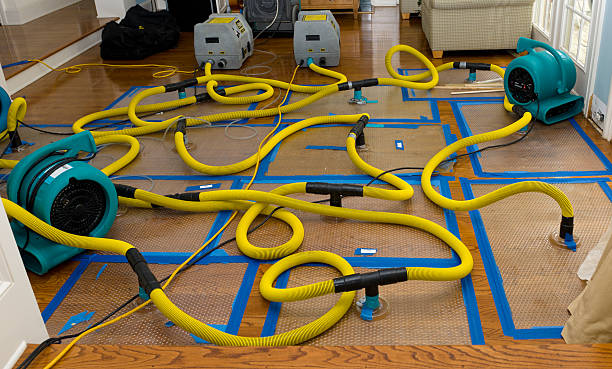
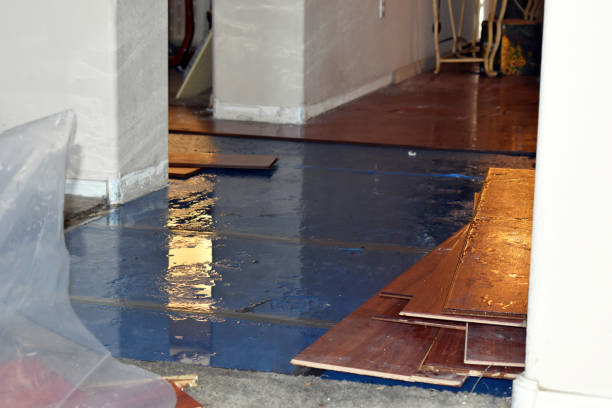
Standing water gets removed with commercial extraction equipment first, then we run moisture readings across every affected surface so the drying plan targets what's actually still wet, not what looks dry on the surface.
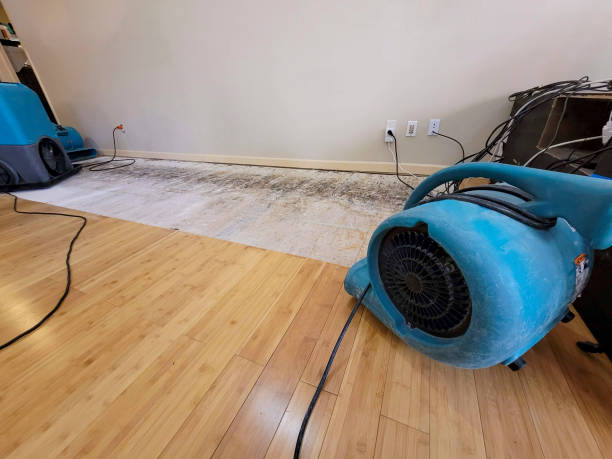
We place industrial air movers and low-grain-refrigerant dehumidifiers based on psychrometric readings, then log moisture levels daily until every affected material returns to a safe drying standard.
Category 3 blackwater intrusions require full PPE, controlled demolition of porous materials that can't be sanitized, and hospital-grade antimicrobial treatment before reconstruction begins.
Because mold can establish in as little as 48 hours, our drying timeline is built around beating that window rather than treating mold prevention as an afterthought.
Once the structure tests dry, our reconstruction team handles drywall, insulation, flooring, and trim so you're not managing a second contractor after the restoration crew leaves.
Specialized cleaning techniques can often save upholstery, electronics, and documents that look like a total loss at first glance, which keeps out-of-pocket replacement costs down.


A real person answers, gathers the details of your water loss, and routes the closest available crew immediately.
The assessment sets the entire plan — skipping it or rushing it is how jobs end up with hidden moisture pockets months later.
Extraction and drying run as one continuous process rather than two separate visits, which keeps the timeline tighter.
We re-test every affected area before calling a job complete, then coordinate repairs so you're not left with an open punch list.
Every technician carries IICRC certification and our crews are fully insured for your protection on every job.
Local staging means shorter drive times, which matters most in the first hour after a water loss.
You get a written estimate before work begins, not a surprise invoice after the drying equipment is already running.
A guarantee only means something if it's backed by a second set of moisture readings, not just a handshake at the end of the visit.
We'd rather run drying equipment an extra day at our own cost than close out a job with a moisture reading we're not confident in.
That same standard applies whether it's a single flooded bathroom or a full commercial loss — the sign-off criteria don't change based on job size.
Call +1-844-578-1604Our New York coverage area spans 10001 10002 10003 10004 10005 10006 10007 10009 10010 10011 10012 10013 10014 10016 10017 10018 10019 10020 10021 10022 10023 10024 10025 10026 10027 10028 10029 10030 10031 10032 10033 10034 10035 10036 10037 10038 10039 10040 10044 10065 10069 10075 10103 10110 10111 10112 10115 10119 10128 10152 10153 10154 10162 10165 10167 10168 10169 10170 10171 10172 10173 10174 10177 10199 10271 10278 10279 10280 10282, with trucks positioned to reach any address in the service radius quickly.
We track call volume by zip code across New York to keep crew staffing matched to where emergencies actually happen most often.

"I called in a panic at 11pm and someone actually picked up. The tech here in New York had air movers set up before midnight and explained exactly what they were doing and why."
James R., New York"They caught mold starting behind our drywall before it spread and contained it properly instead of just painting over the problem like a previous contractor did."
Denise M., New York"The sewage backup in our laundry room was handled with full PPE and proper disposal of the ruined flooring. I appreciated that they explained the Category 3 contamination process before starting."
Marcus T., New York"The reconstruction crew matched our original flooring almost perfectly after the water damage repair — you'd never know there was a leak."
Priya S., New York"The thermal imaging inspection found damage behind a cabinet we never would have thought to check, which probably saved us from a much bigger mold problem down the road."
Carlos V., New York"They minimized business disruption by sectioning off the wet area instead of shutting down the whole space during drying."
Angela F., New York"A cracked supply line under the kitchen sink went unnoticed for days and by the time we called, the subfloor was saturated. The crew pulled the damaged material and had drying equipment running within the hour."
Tyrone B., New York"Storm runoff got into our crawl space and the smell alone told us something was wrong. The crew found the vapor barrier had failed and fixed the actual cause, not just the symptom."
Wendy K., New York